The two battles at Fort Fisher saw one of the largest armadas every assembled in human history. The combined fleet bombarded the fort with more 40,000 shells, a masterpiece of technological death-dealing. This is the definitive historical atlas of those American Civil War battles.


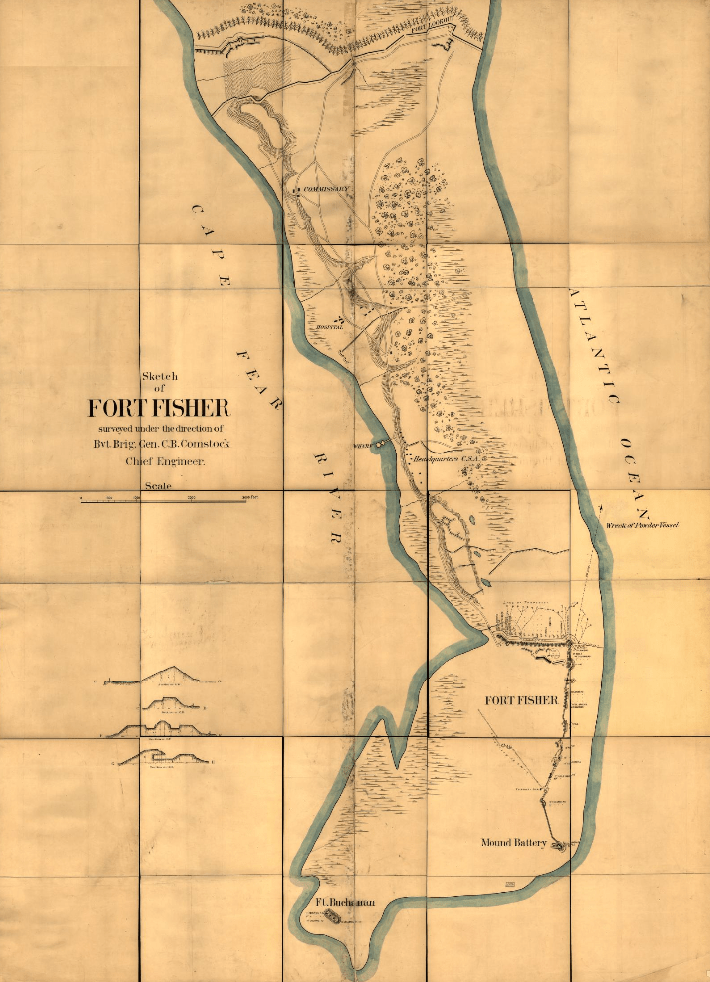


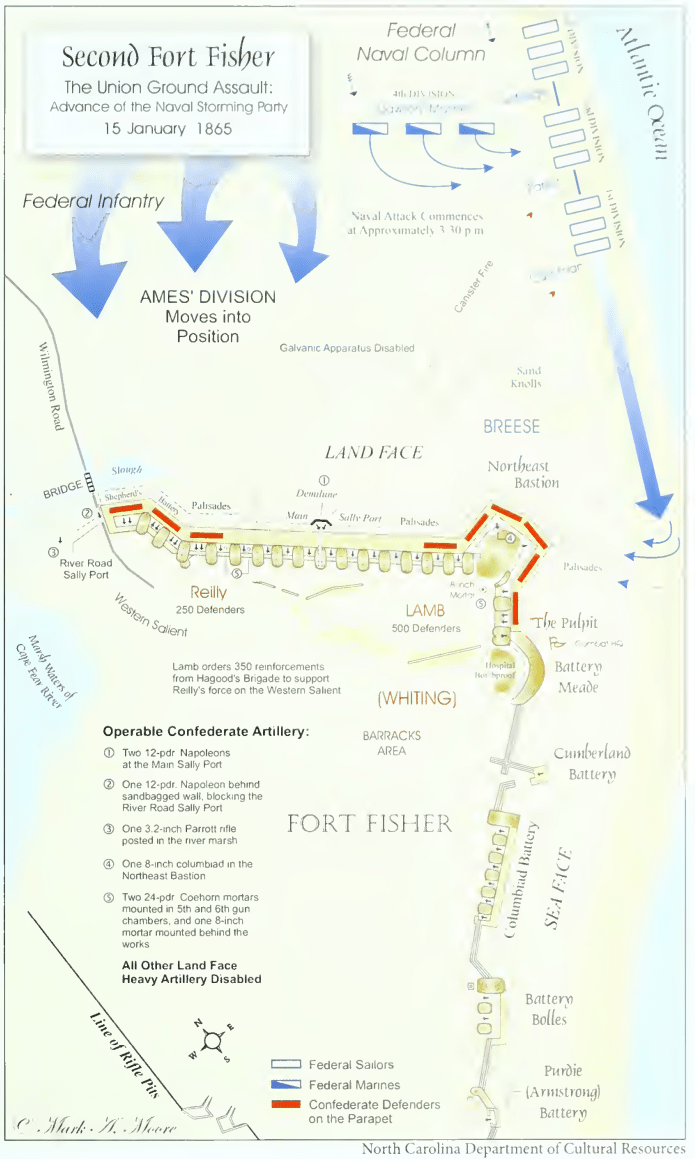
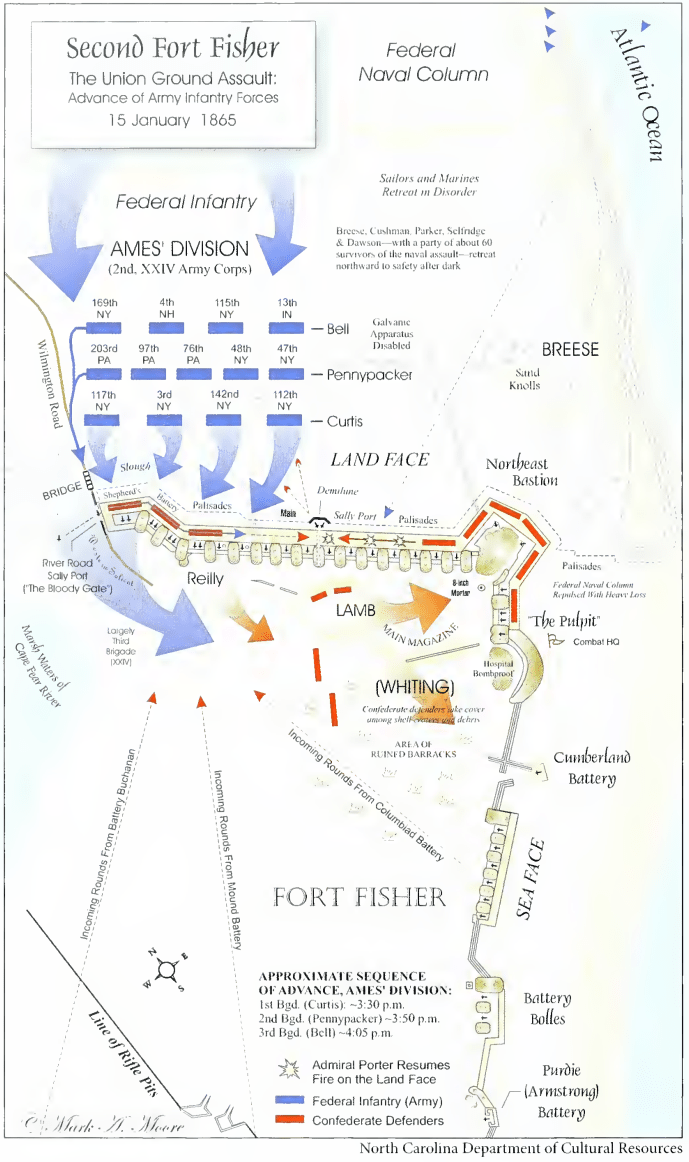
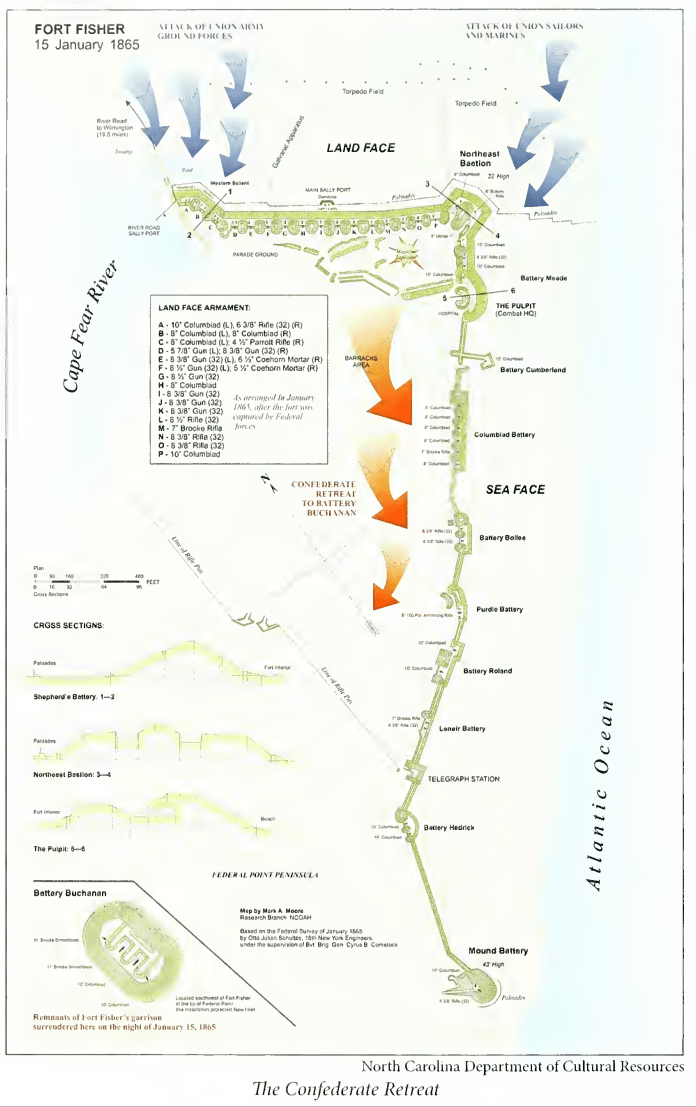


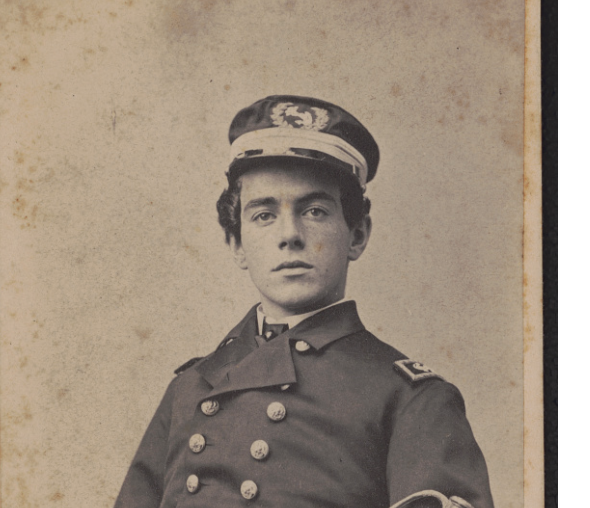

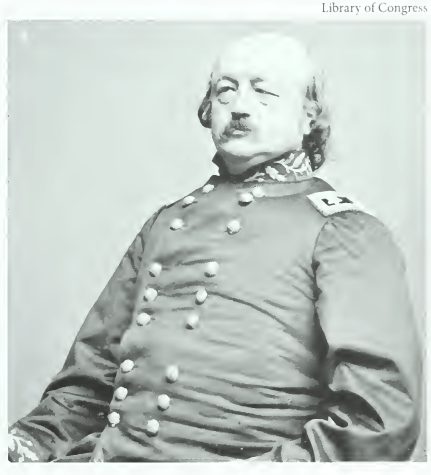


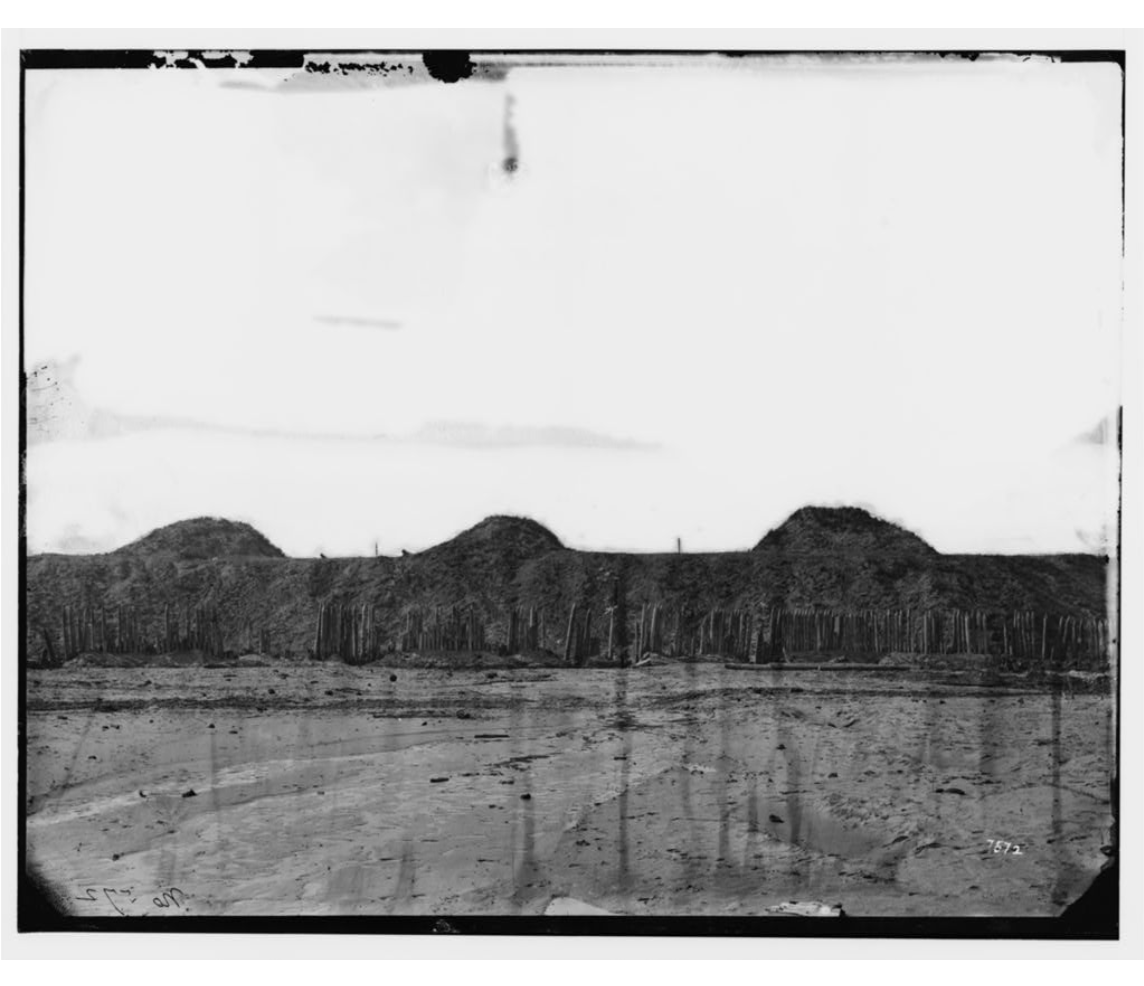


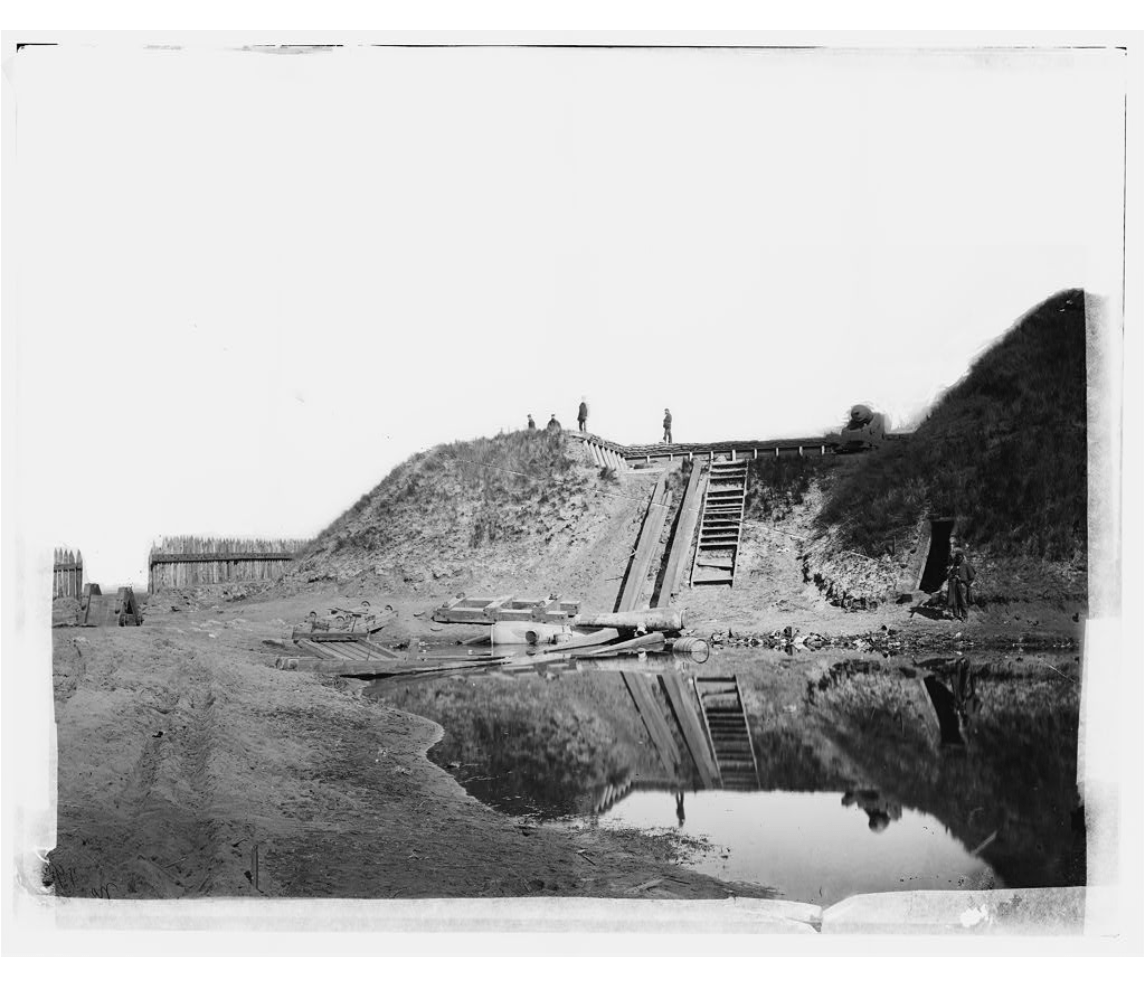

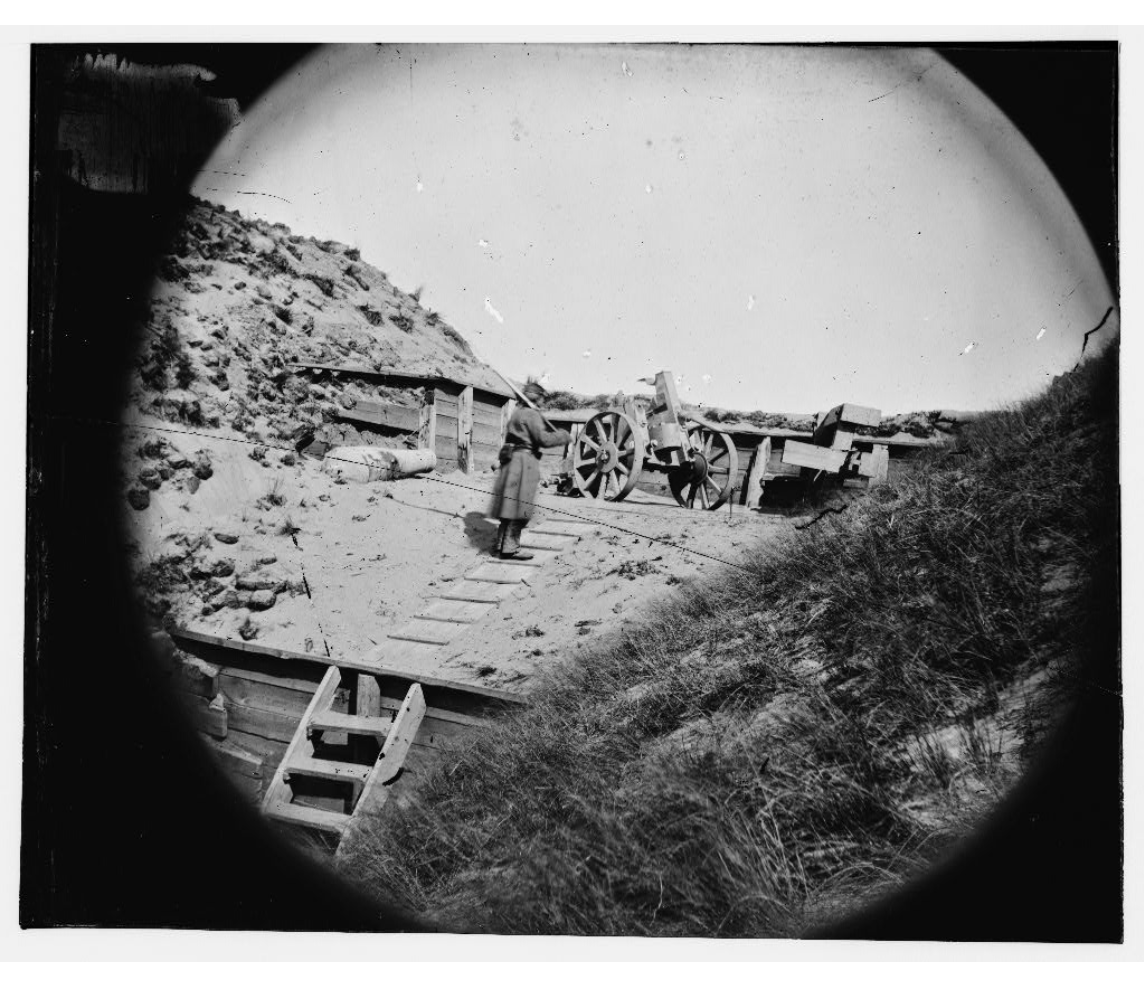
(Library of Congress).




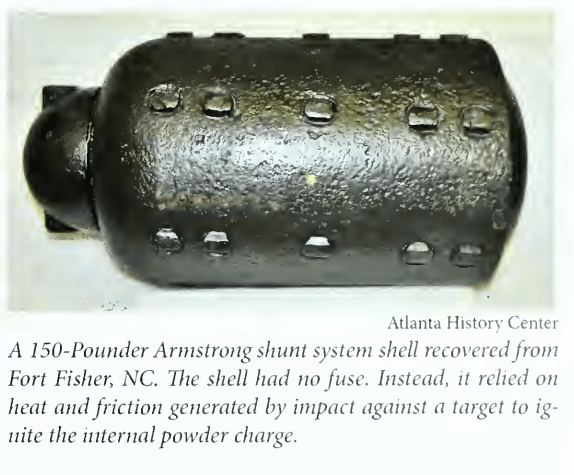


An artist’s rendering of the Union infantry assault on Fort Fisher.


References:
The Wilmington Campaign: Last rays of departing hope by Chris Fonvielle Jr.
Confederate Goliath: The Battle of Fort Fisher by Rod Gragg
The last stronghold: the campaign for Fort Fisher by Richard McClaskin
Spring 1865 : the closing campaigns of the Civil War by Perry Jamieson
The Civil War in North Carolina by Barrett, John Gilchrist
The Tar Heel State: A New History of North Carolina by Milton Ready
Faces of Fort Fisher, 1861-1864 by Chris Fonvielle
Clayton, B. (2013). Applying GIS to locate the USS Louisiana: A study of the Fort Fisher Civil War Naval Battlefield. [Master’s Thesis, East Carolina University].
Ludwick, M.P. (1995). Your most obedient son: The Civil War letters of William Tell Cobb. [Master’s Thesis, The College of WIlliam and Mary].
Longacre, E.G. (1988). The army of the James, 1863-1865: A military, political, and social
history. (Volumes I – IV) [Doctoral Dissertation, Temple University].
Washington, V.F. (1995). Eagles on their buttons: The Fifth Regiment of Infantry, United States Colored Troops in the American Civil War. [Doctoral Dissertation, Ohio State University].
McAllister, R.M. (1968). The amphibious Battles of Fort Fisher, North Carolina, December, 1864 – January, 1865; Showing the role of conflicting personalities and the chaos inevitable in the waging of war. [Master’s Thesis, University of Southern California].
Megelsh, M. (2015). A Mainer from Rockland: Adelbert Ames in the Civil War. [Master’s Thesis, Liberty University].
Henry C. Lockewood “The Capture of Fort Fisher,” The Maine Bugle, (January 1894).
Capture of Fort Fisher by Adelbert Ames
Jean Vial Pays des lions fidèles.
Anonymous. Assault on Fort Fisher. On Point Magazine, Spring 2010, Vol. 15, No. 4 , p. 48.
Black Troops in the Army of the James, 1863-65 by Edward G. Longacre. Military Affairs, Vol. 45, No. 1 (Feb., 1981), pp. 1-8.
Butler’s Folly: The First Battle of Fort Fisher, December 1864 by Taylor Hess. On Point, Vol. 16, No. 4 (Spring 2011), pp. 6-13.
Lamb, W. (1893). The defender of Fisher; Col. Lamb’s address in Wilmington, N.C..
Fleet against Fort by: John Hayes. Ordnance, Vol. 45, No. 243 (NOVEMBER-DECEMBER 1960), pp. 357-360.
Fort Fisher: Amphibious Victory in the American Civil War by: Gary J. Ohls. Naval War College Review, Vol. 59, No. 4 (Autumn 2006), pp. 81-99.
Fort Fisher (1865) by A.G. Lawrence.
Hurricane of Fire: The Union Assault on Fort Fisher by Charles Robinson
Rebel Gibraltar: Fort Fisher and Wilmington, C.S.A. by James Walker
Running the blockade. A personal narrative of adventures, risks and escapes during the American civil war by Thomas E. Taylor (1896).
Shock and Assault in the First Battle of Fort Fisher by Charles L. Price and Claude C. Sturgill. The North Carolina Historical Review, Vol. 47, No. 1 (January, 1970), pp. 24-39.
Wightman, S.K. In search of my son. American Heritage Magazine. Vol. 14, No. 2 (February 1963).
Turner, H.M. “Rocked in the cradle of consternation. American Heritage Magazine. Vol. 31, No. 6. (October/November 1980).
“Welcome Brothers!” The 1865 Union Prisoners of War Exchange in North Carolina by Chris Fonvielle Jr. The North Carolina Historical Review, Vol. 92, No. 3 (JULY 2015), pp. 278-311.
Incidents and Anecdotes of the Civil War by Admiral David Dixon Porter.
A Sailor’s Log: Recollections Of Forty Years Of Naval Life by Robley Evans
History of the 117th New York by J.A. Mowris.
The autobiography of Admiral Dewey by George Dewey.
Fonvielle, C.E. Jr. (1994). “The last rays of departing hope”: The battles of Fort Fisher,
the fall of Wilmington, North Carolina, and the end of the Confederacy. [Doctoral Dissertation, University of South Carolina].
Fort Fisher, December 1864-January 1865 by David W. Kummer, (2012).
The Fall of Fort Fisher: Contested Memories of the Civil War by Warren Ellem.The North Carolina Historical Review, Vol. 79, No. 2 (APRIL 2002), pp. 198-233.
Merrill, J.M. The Fort Fisher and Wilmington Campaign: Letters from Rear Admiral David D Porter. The North Carolina Historical Review, Vol. 35, No. 4 (OCTOBER 1958), pp. 461-475.
Ryan, J.T. (1997). On Land and Sea:The United States Marine Corps in The Civil War. [Doctoral Dissertation, Temple University].
Thompson, B. and Owsley, F.L. Jr. The War Journal of Midshipman Cary. Civil War History, Vol. 9, No. 2, June 1963, pp. 187-202.
Helsley, A.J. Vox Populi and the Fall of Fort Fisher. The South Carolina Historical Magazine, Vol. 96, No. 1 (Jan., 1995), pp. 71-73.
Wood, R.E. (1976). Port town at war: Wilmington, North Carolina 1860-1865. [Doctoral Dissertation, Florida State University].
Hoole, S.W. (1956). Vizitelley covers the Confederacy.
Freeman, D.S. (1936). R. E. Lee: A Biography


 Battlecast
3 thoughts on “The Definitive Historical Atlas of the Battle of Fort Fisher”